 Lucas RappartPricing· 3 min read
How to set your first freelance day rate
Your salary divided by 220 days is the wrong answer. Here is the order of operations that gives you a day rate you can actually live on.
Most designers set their first day rate the same way: take their old salary, divide it by the number of working days in a year, and add a little on top. It feels reasonable. It is almost always too low.
The problem isn't the number. It's the order of the calculation.
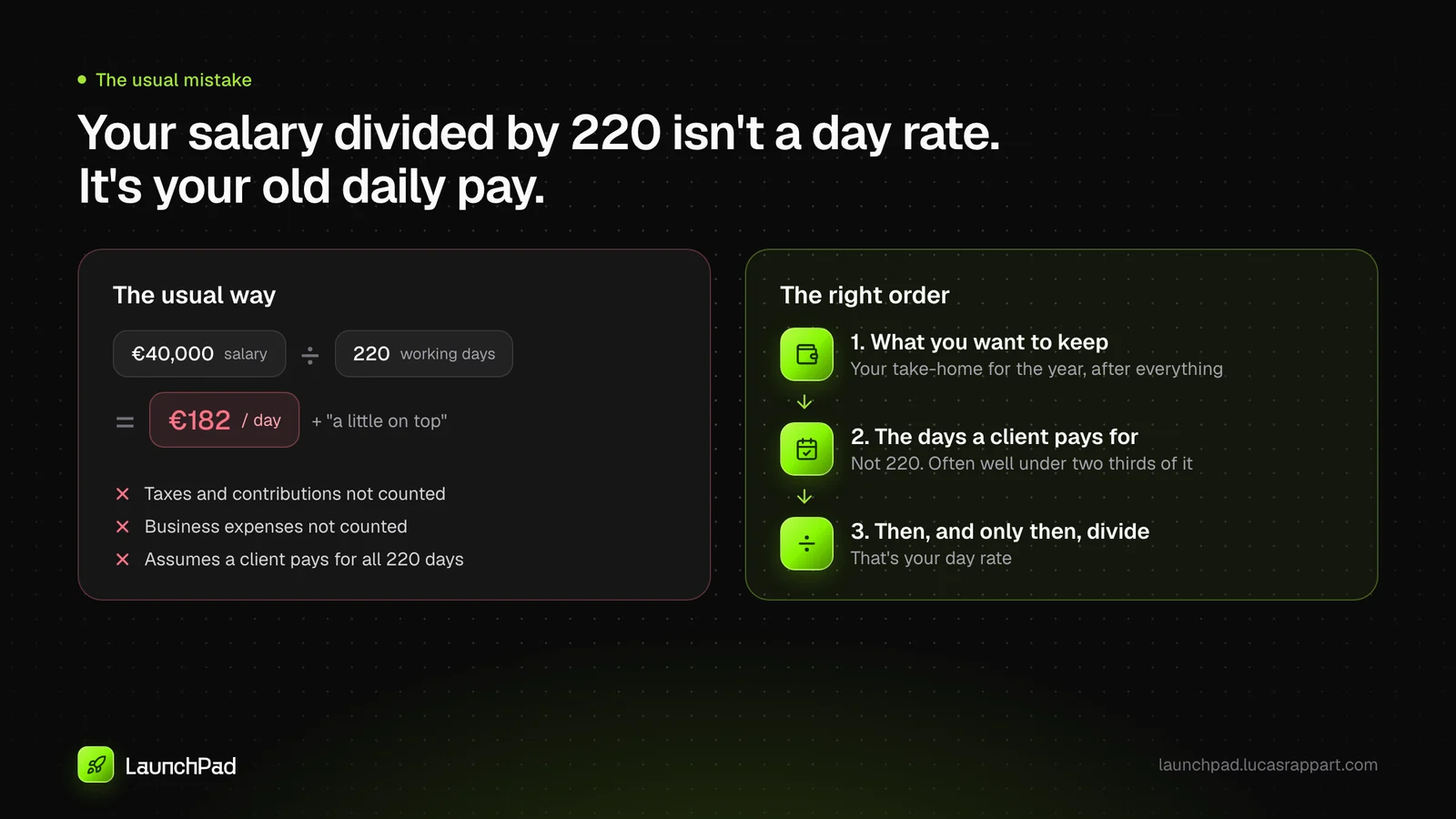
Start from what you want to keep
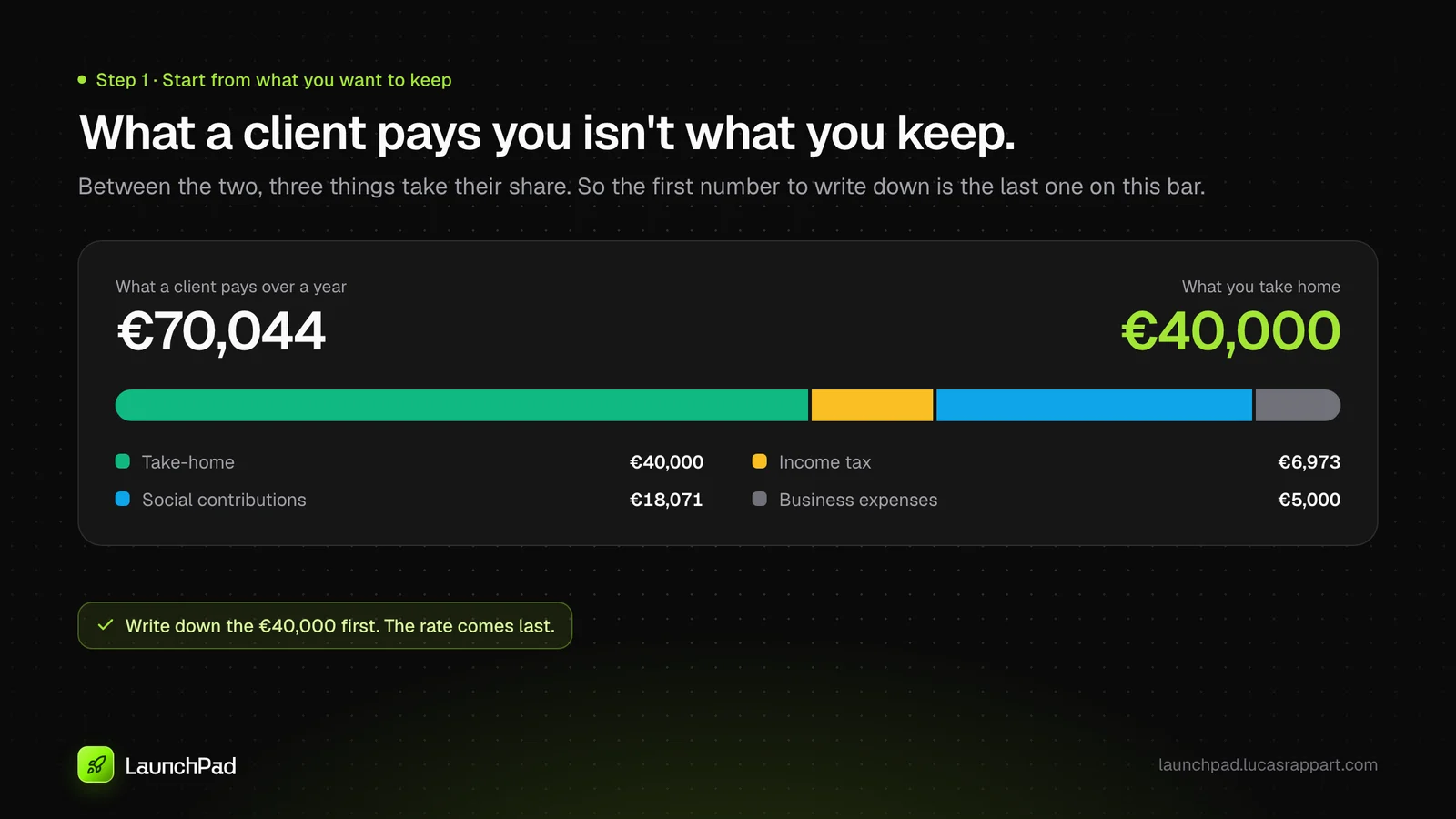
Your day rate isn't what you earn. It's what a client pays you for one day of work. Between the two, several things take their share:
- Income tax, which depends on your country and your status.
- Social contributions, which an employer used to pay for you without you seeing them.
- Business expenses: software, hardware, insurance, an accountant.
So the first number to write down isn't a rate. It's the income you want to take home over a full year, after all of that.
Count the days a client actually pays for
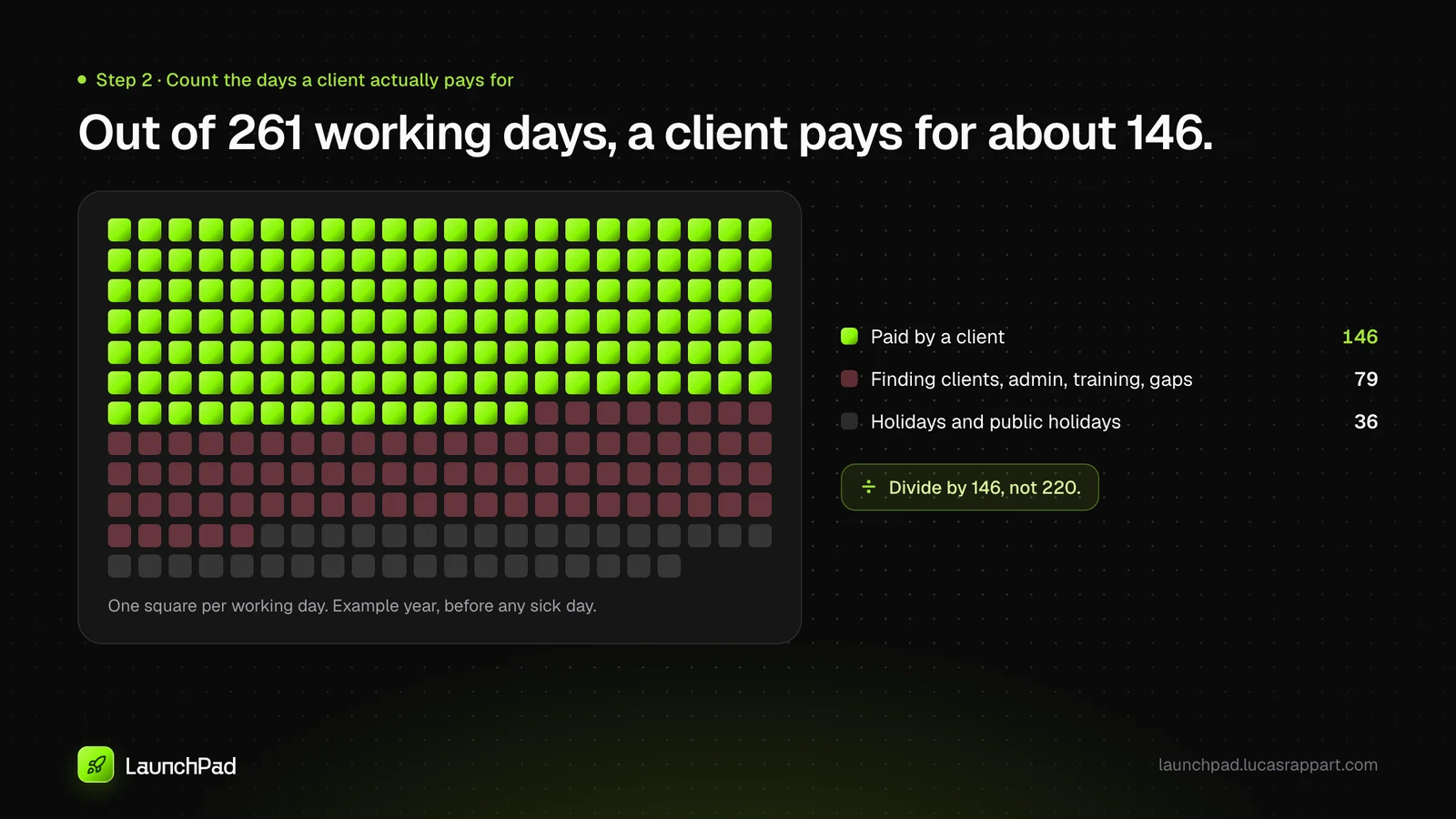
An employee is paid for every working day. A freelancer is only paid for the days a client pays for.
Out of a year, remove your holidays and public holidays. Then remove the days that go to finding clients, admin, training and the gaps between two projects. What's left is often well under two thirds of your working days.
That's the number your rate has to be divided by, not 220.
Then, and only then, divide
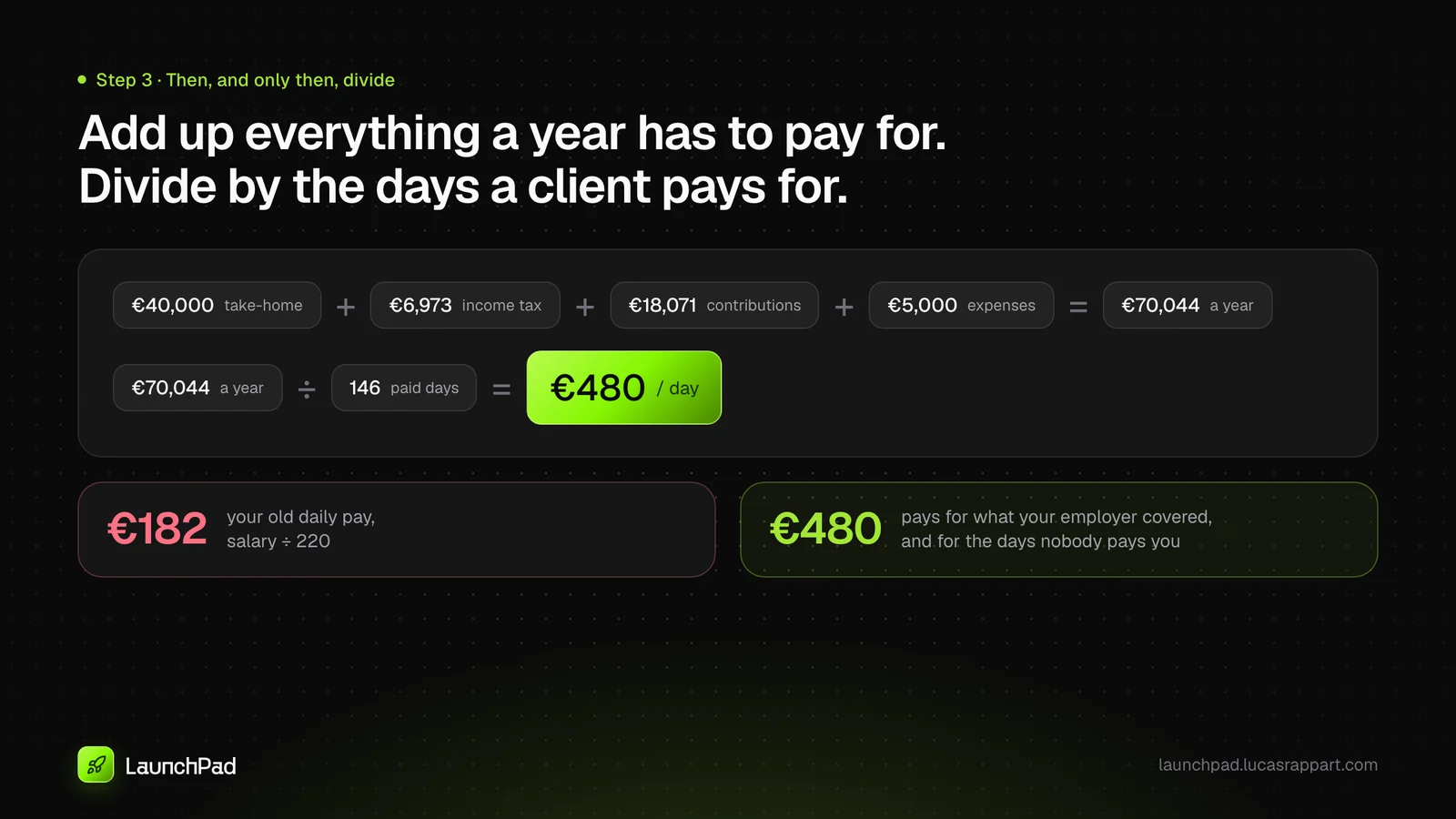
Add up what you want to take home, your taxes, your contributions and your expenses. Divide by the days a client pays for. That's the day rate that keeps you where you want to be.
It will look high compared to your old daily salary. That's normal: it pays for everything your employer used to cover, and for the days nobody pays you.
Check it against your market
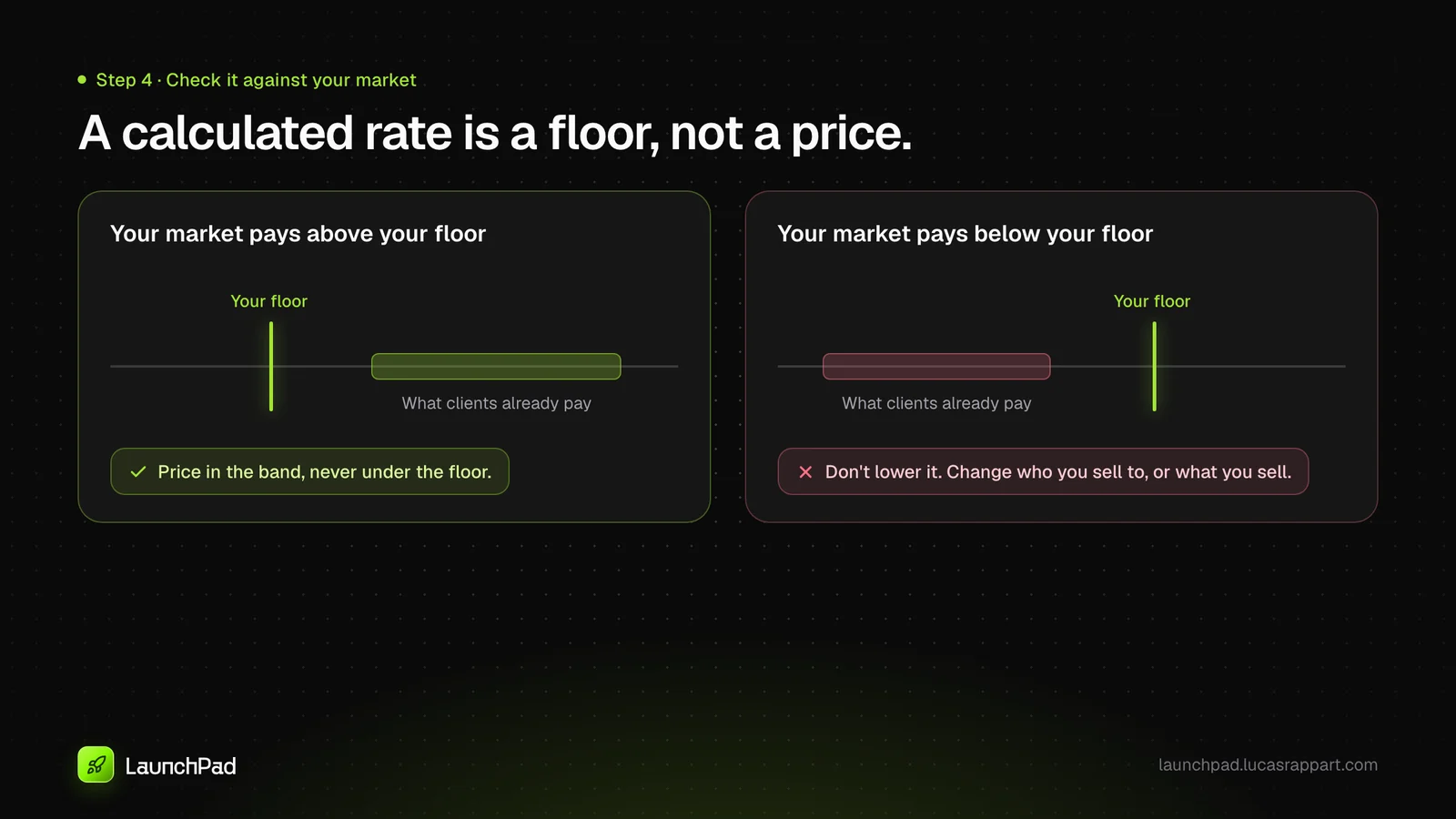
A calculated rate is a floor, not a price. Before you send a quote, check it against what clients in your market are used to paying, and against the value of the problem you solve for them.
If your floor is above what your market pays, the answer isn't to lower it. It's to change who you sell to, or what you sell.
Run your own numbers with the free day rate calculator: it does this whole calculation with 2026 taxes and contributions for France, Belgium, Switzerland, the UK and the US.
Get the next article by email
Pricing, positioning and finding clients, from my own client work. One email a week, nothing else.